How to Succeed in Group Projects at Austrian Universities
Understanding the Austrian Academic Approach
Austrian universities place a significant emphasis on collaborative learning as an essential part of their educational philosophy. Enrolling at an Austrian higher education institution often means encountering group projects across numerous disciplines. These projects are not only intended to deepen students’ understanding of the subject matter but also to cultivate essential professional skills recognized both within Austria and internationally.
Key Takeaways:
- Group projects are integral to the educational framework.
- These collaborative experiences enhance both academic understanding and professional skill development.
Preparation for Group Work
Language Preparation
Before initiating your studies, it is crucial to ensure adequate language proficiency in the medium of instruction. Effective communication within group settings is vital; thus, consider the following steps:
- Enroll in preparatory language courses to boost proficiency in German or English, depending on your program.
- Obtain language certificates that demonstrate your skill level to ease your entry into academic discussions.
Cultural Understanding
Austrian academic culture values punctuality, thoroughness, and direct communication. Being familiar with these norms will greatly aid in the integration process. Here are a few cultural aspects to consider:
- Cultivate a habit of arriving on time for meetings.
- Be prepared for straightforward discussions, as constructive feedback is standard practice.
Effective Group Project Strategies
Early Communication
Once assigned to a group, it is important to establish communication channels as soon as possible. Digital platforms like WhatsApp, Microsoft Teams, or Slack are often used by Austrian students for project coordination. Effective early communication sets a strong foundation for cooperation and coordination, leading to greater success.
Clear Role Distribution
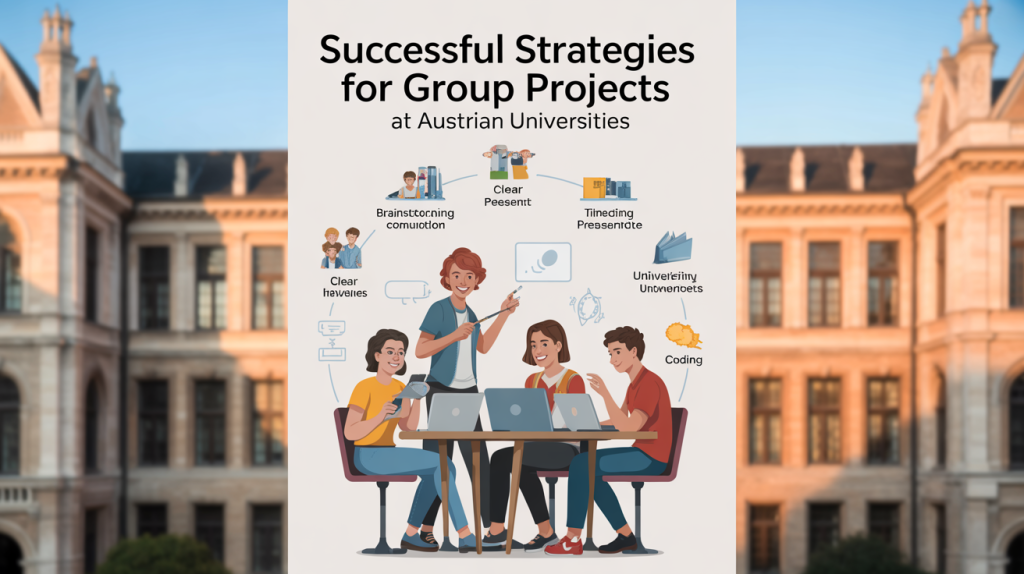
Successful outcomes in group projects typically stem from clearly defined roles assigned based on each member’s strengths. To excel in your group, consider:
- Discussing each member’s skills and preferences early in the project.
- Assigning roles that align with individual strengths to maximize efficiency and engagement.
Regular Check-ins
Scheduling consistent meetings to monitor progress is a common practice in Austrian academic culture. Regular check-ins help to:
- Ensure timelines are being adhered to.
- Facilitate ongoing communication, addressing any issues or concerns as they arise.
Overcoming Common Challenges
Cross-Cultural Communication
Austrian universities attract a diverse student body, making cultural competence a crucial skill. Embrace this diversity by:
- Engaging in open discussions that respect varied problem-solving approaches.
- Valuing different perspectives as strengths in collaborative endeavors.
Time Management
Austrian academic standards often necessitate well-structured deliverables that require thorough research. To streamline the group’s workflow:
- Develop a timeline that accommodates individual contributions and allows for necessary revisions.
- Use project management tools to help track deadlines and tasks effectively.
Conflict Resolution
When disagreements occur, it is important to address them directly and professionally. Here are recommended approaches:
- Foster a culture of open dialogue where members feel safe to voice concerns.
- Explore mediation services available through your university’s international office if conflicts become challenging to resolve.
Utilizing University Resources
Support Services
Many universities in Austria offer specialized support services for international students. Engage with the international offices to:
- Obtain valuable resources tailored to group work dynamics.
- Access guidance on cultural integration to enhance your collaborative experiences.
Academic Writing Centers
A wealth of resources is often available through academic writing centers at Austrian universities. These centers typically offer support for:
- The documentation aspects of group projects, ensuring that academic standards are met.
- Providing workshops that focus on effective writing and presentation skills.
Post-Project Reflection
After completing a group project, take time for self-reflection. Austrian universities promote self-assessment, which can profoundly enhance future collaborative engagements. Reflect on:
- What worked well and what could have been improved in your group dynamics.
- How you can apply the lessons learned in future projects or professional settings.
Take the Next Step with Study in Austria
At Study in Austria, we are dedicated to supporting international students as they navigate their educational journeys in Austria. If you are interested in learning more about our services, partnerships, or additional resources for international students, don’t hesitate to explore further.