
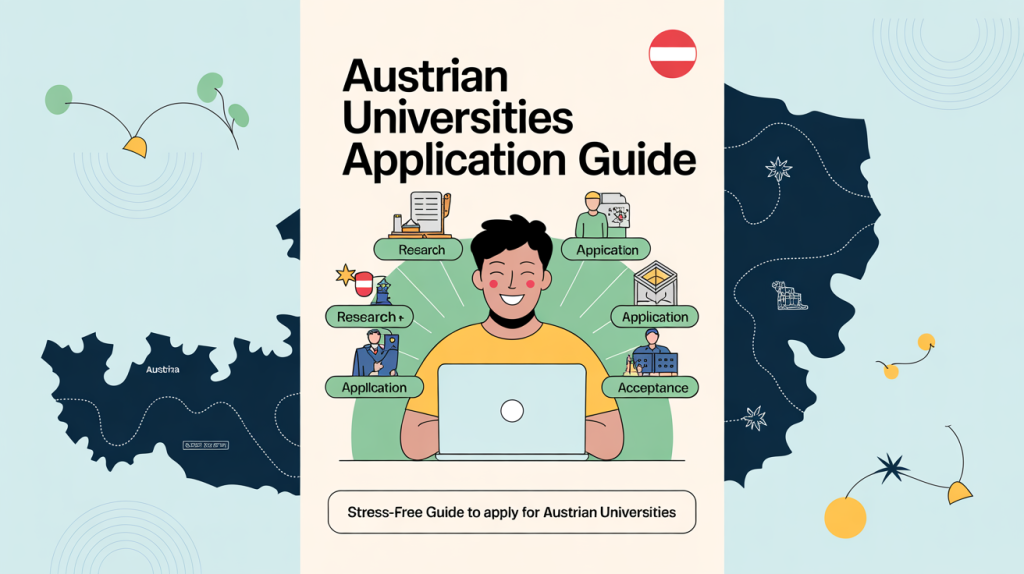
How to Apply for Austrian University Admissions Without Stress
Understand the Landscape of Austrian Higher Education
Austria boasts a diverse and rich higher education system, featuring a range of universities, universities of applied sciences, and specialized institutions. Each provides unique programs catering to various fields of study, ensuring that international students can find options aligned with their academic and professional aspirations.
Additionally, Austrian universities are recognized worldwide for their high academic standards and innovative research, making them attractive for students from all over the globe. Understanding the landscape is critical as it helps streamline your application process and align your goals with the right institution.
Step-by-Step Guide for a Stress-Free Application Process
1. Choose Your Program and University Early
- Research Options: Evaluate Austrian universities and the programs they offer that align with your interests and career goals. Websites like Study in Austria provide extensive resources to assist in decision-making.
- Language Considerations: Most bachelor’s programs are offered in German, necessitating an assessment of your language proficiency. If you’re looking at programs taught in English, several universities provide options.
2. Review Admission Requirements Thoroughly
- Individual Requirements: Each Austrian institution has specific admission criteria. Consult the official program page of your chosen university.
- General Requirements: For various programs, you will typically need:
- Bachelor’s Programs:
- Proof of nationality (passport copy)
- Secondary school leaving certificate
- Proof of German language proficiency (equivalent to at least four years of secondary school)
- Master’s Programs: A relevant bachelor’s degree with at least six semesters (180 ECTS).
- PhD Programs: A master’s degree in a field correlated with your research proposal.
- Bachelor’s Programs:
- Entrance Exams and Additional Criteria: Some programs, especially in fields like medicine or arts, may require entrance exams or interviews. These can have deadlines up to six months prior to semesters, so maintain proactive communication with universities.
3. Gather and Prepare All Required Documents
- Documentation Checklist: Ensure that all necessary documents are prepared in advance. Typical documents include:
- Completed application form (available on the university’s official website)
- Certified copies and translations of academic certificates
- Proof of language proficiency
- Passport copy
- Recognition of Qualifications: Non-EU/EEA applicants should verify that their qualifications are recognized as equivalent to the Austrian standards.
4. Submit Your Application on Time
- Application Deadlines: Different universities set their own deadlines; generally, aim to register by September 5th for the winter semester and February 5th for the summer semester. Check timelines specific to your program.
- Submission Process: Applications should be sent directly to the Admissions Office of your university, along with all required documentation. Ensure compliance with any additional requirements associated with specific programs.
5. Track Your Application Progress and Stay Organized
- Post-Submission Monitoring: After submission, keep an eye on your email and university portal for updates or additional requests, as prompt responses can be critical.
- Documentation Management: Keep digital and hard copies of all submitted documents for personal records.
6. Prepare for Next Steps
- Admitted Students: If you receive an offer, follow the university’s instructions for enrollment, securing a student residence permit, and housing arrangements.
- Special Requirements: Prepare for interviews, entrance exams, or portfolios if required by your program. Familiarize yourself with the format and content needed for these assessments.
Additional Tips for a Stress-Free Application Experience
- Start Early: Initiate your application process as early as possible to ensure ample time for document gathering and compliance with deadlines.
- Use Checklists: Creating checklists for required documents and submission deadlines can help streamline your application and ensure nothing is overlooked.
- Seek Support: Reach out to the admissions or international office of your chosen institution for clarifications and support—their guidance can be invaluable.
- Verify Documentation: Double-check all translations and certifications to prevent unnecessary delays in processing.
Conclusion: Your Pathway to Studying in Austria
By following these structured steps and consistently referring to official information from Study in Austria and your target institution, you can confidently navigate the Austrian university application process.
Feeling overwhelmed? Our team at Study in Austria is here to help you every step of the way. Whether you are an individual student, an international recruiter, or part of a university admissions team, we offer tailored services and resources to simplify and enhance your university recruitment and admissions experience.
For more information or to explore partnership opportunities, feel free to contact us today. Your success in achieving academic goals in Austria is our priority, and we are committed to making your journey as seamless and enriching as possible.
Take the Next Step with Study in Austria
Ready to take your educational journey to the next level? Explore what Study in Austria has to offer and start your application process today.