Preparing for Group Projects in Austrian Universities
University Preparation Programs
Understanding support for international students is crucial for success in group projects.
Understanding Support for International Students
Before engaging in group projects, it is crucial to familiarize yourself with the preparatory support available for international students. The University Preparation Programs in Austria offer intensive courses designed for foreign applicants, ensuring they meet the standards set by universities. These programs are especially advantageous for acquiring foundational skills pivotal for successful group dynamics.
Key Areas Covered in the Preparation Programs:
- German as a foreign language
- English
- Mathematics
- Physics
- Chemistry
- Biology
- History
- Geography
These subjects are fundamental as they equip students with the necessary academic language and content knowledge, fostering collaborative efforts in projects. The OeAD (Agency for International Cooperation in Education and Research) coordinates these preparation programs at institutions in cities like Vienna, Graz, and Leoben, ensuring a structured path for international students.
For more information on the pathways available, refer to our section on Pre-Study Preparation.
Importance of Language Preparation
Building a Strong Linguistic Foundation
Proficiency in the language of instruction is a prerequisite for participating in group projects effectively:
- German Language Courses: If your program is conducted in German, a proficiency level of at least A2 is required to enroll in the language preparation courses. Improving your German language skills can significantly enhance your ability to communicate in group settings and engage with your peers.
- English Language Courses: For programs taught in English, strong communication in English will be equally important.
Language proficiency not only aids in academic performance but also helps in building relationships with fellow students, which is essential for collaboration and teamwork on group assignments.
Enhancing Collaborative Skills
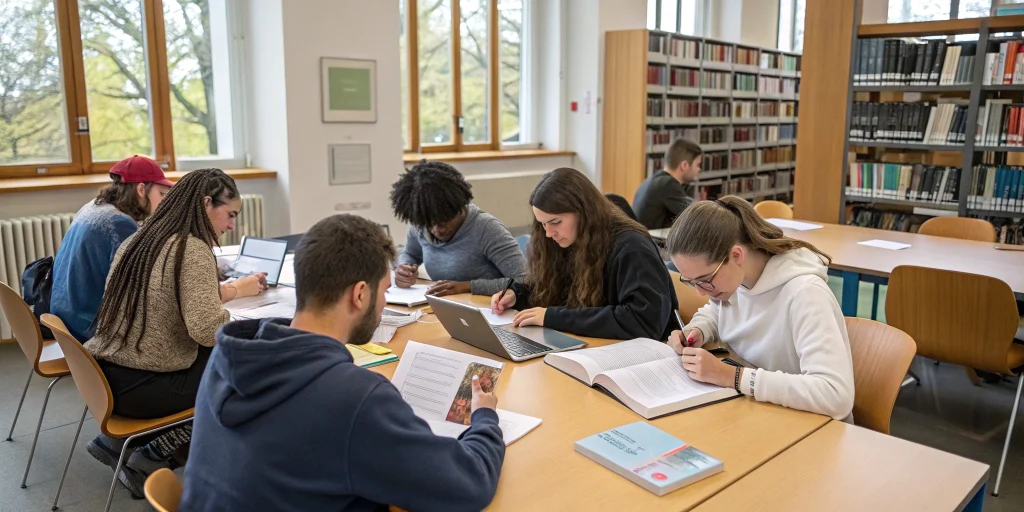
To foster effective group work, students must practice both their spoken and written skills. Engaging in language practice sessions, participating in discussion groups, and utilizing language learning platforms will prepare students for the collaborative nature of projects.
Academic Workload and Curriculum Design
Navigating the Austrian Education System
Familiarizing yourself with how the academic workload and curriculum design work will equip you for group projects.
- Workload Regulation: The annual workload for students in Austria must not exceed 1,500 hours. Understanding how this is distributed can provide clarity on how much time you can allocate to group projects versus individual assignments.
- Curriculum Goals: At Austrian universities, particularly at Universities of Applied Sciences (Fachhochschulen), curricula are developed in alignment with professional requirements. This design ensures students acquire essential skills necessary for their respective fields.
Being aware of the academic structure helps students prioritize their time and contribute effectively to group project discussions and work.
Practical Tips for Successful Group Projects
Based on insights from the educational framework in Austria, here are practical steps international students can take to excel in group projects:
- Enhance Language Skills: Focusing on the language of instruction prior to starting your program will give you an advantage in group work. Consider enrolling in intensive language courses or conversation clubs.
- Familiarize Yourself with the Curriculum: Understanding your program’s structure and expectations for group work will help you navigate the collaborative aspects of your studies. Pay special attention to how group projects are assessed and the objectives they aim to achieve.
- Develop Strong Time Management Abilities: Given the regulated workload, proficient time management is essential. Use tools like planners, apps, or online calendars to balance group assignments and individual responsibilities efficiently.
- Maintain a Professional Focus: Approach group projects with a career-oriented mindset. Recognize that the skills you develop during these projects—such as teamwork, communication, and problem-solving—are invaluable in the workforce.
- Engage in Group Discussions Early: Once placed in a group, take the initiative to introduce yourself, share your ideas, and express any concerns. Early engagement fosters a sense of teamwork and makes collaboration smoother down the line.
For personalized guidance on navigating your studies and preparing for group projects in Austria, consider reaching out to Study in Austria.
Conclusion
Successfully preparing for group projects in Austrian universities involves understanding the local educational framework, optimizing language proficiency, and developing effective collaboration skills. Through proactive engagement in university preparation programs, clear comprehension of the academic workload, and focused language training, international students can excel in collaborative settings.
Study in Austria is committed to supporting international students throughout their educational journeys. Whether it is through providing resources for language preparation, offering insights into the curriculum, or assisting with partnerships among institutions and agencies, we are here to help.
If you are ready to take the next steps in your academic journey in Austria or wish to partner with us, please reach out today. Let us help you achieve your educational aspirations in one of Europe’s most beautiful and culturally rich countries.
Take the Next Step with Study in Austria
Explore further and make the most of your academic experience in Austria. We’re here to support your journey.